+372 5163 633
WaterMate Boats
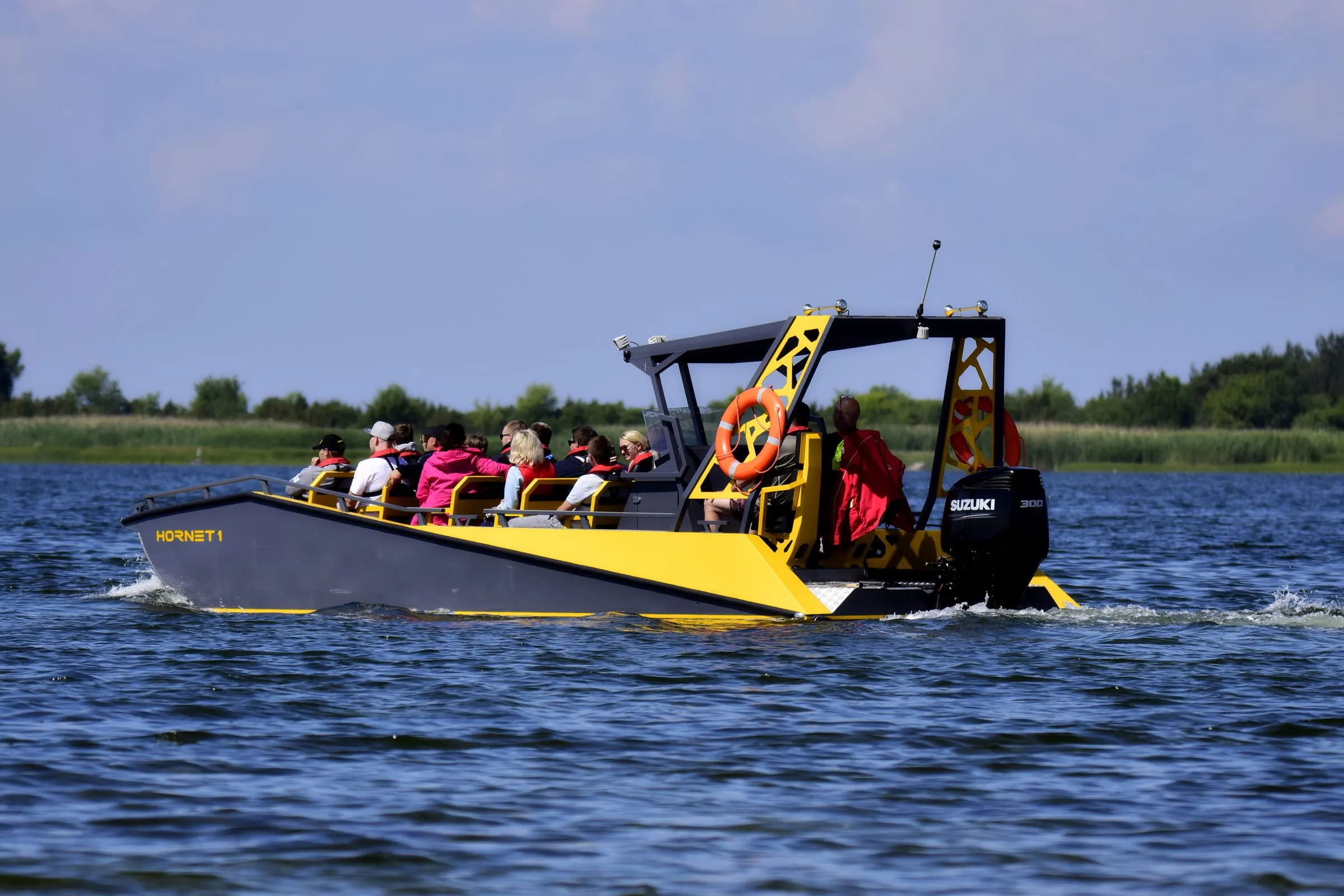
An LR9 Safari underway on open water with a full load of passengers seated on the forward benches and two crew at the helm behind them

Safari boats · Tour boats · Water taxis · Small ferries

Boats for tour operators
and passenger routes

Your passengers sit ahead of the helm, open to the water. The crew steer from behind, where the whole deck stays in view.

Founded
2018
Designed and built in
Estonia

The range

Two boats, and the
water each one is for

Model pages are being updated. Tell us the route you run and we will send the specifications directly — request a quote.

What decides whether
a season pays

01

Turnaround decides the day

Boarding from the bow or alongside, and a clear centre walkway with no step to slow a queue. How many departures you get out of a day is decided at the dock, long before top speed comes into it.

02

Shallow draft, low wash

A draft measured in centimetres reaches shallows and beach landings that larger passenger boats route around. Low wash matters on rivers and lakes where wake is regulated.

03

Priced against one season

Payload, seat count, fuel burn and turnaround get specified against the routes you actually run, so the figure we work back from is how fast the boat pays for itself.

We ran one of these ourselves for two seasons on the Danube in Bratislava — so the first questions we ask about your route are the ones we had to answer for our own.

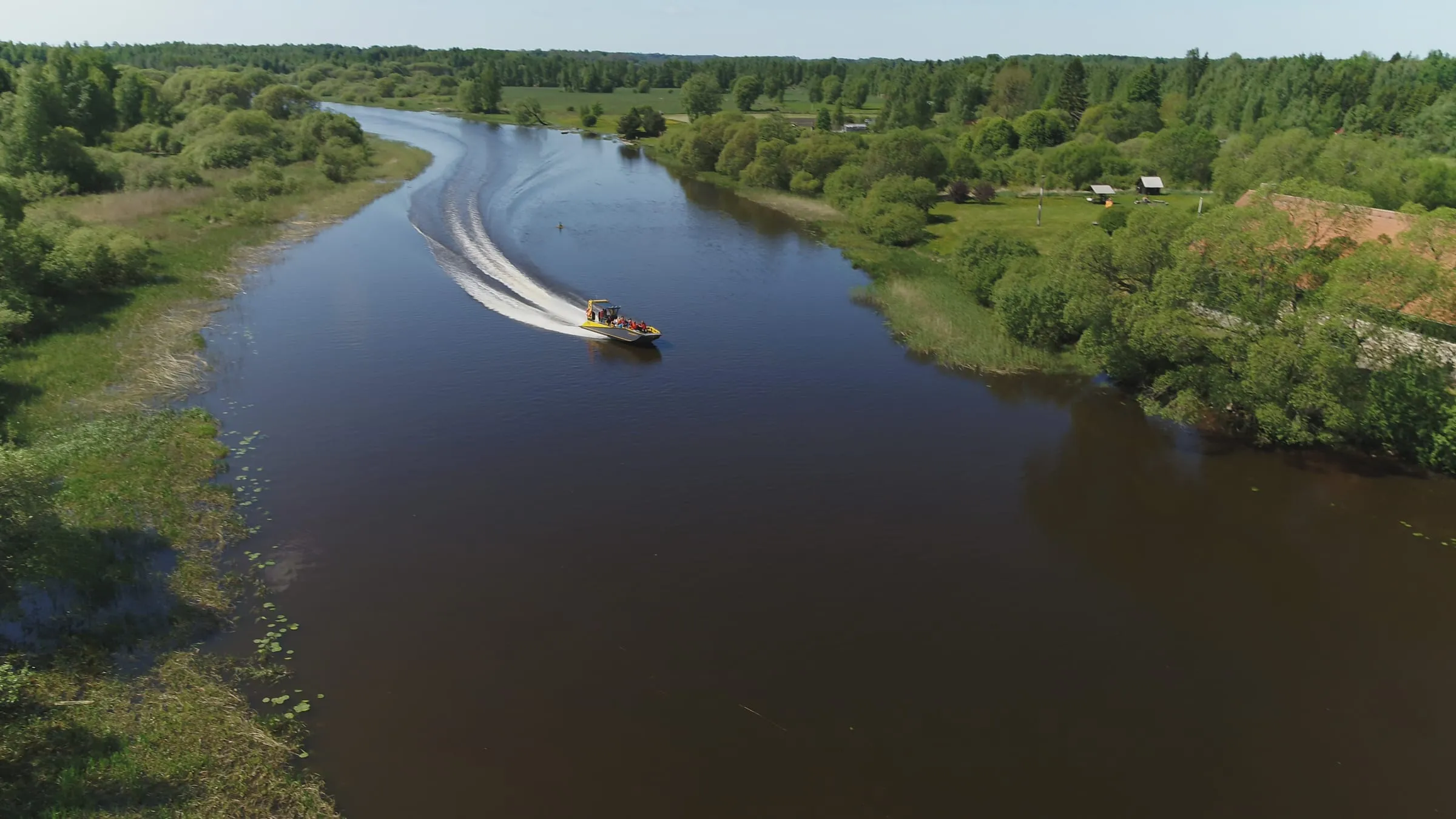
Aerial view of an LR9 Safari running a narrow, winding river between wooded banks, passengers in lifejackets on the forward benches and a long clean wake curving behind
An LR9 Safari at speed on a river with passengers aboard, photographed from a drone.

Choose the hull

Aluminium, or HDPE

Design, layout and passenger numbers are identical in either material. HDPE is the more affordable choice — ask for a price in both when you request a quote.

Aluminium

Proven in service

  • The LR9 Safari holds CE design category C, assessed by IMCI, a notified body.
  • Dents rather than tears under a hard landing, and holds its shape.
  • Welded repair is available in any commercial yard in Europe.
  • In salt water it needs anodes, coatings and a corrosion inspection routine.

HDPE

The more affordable hull

  • The yard that welds these hulls builds HDPE patrol and search-and-rescue boats.
  • Three times the plate thickness of aluminium at the same hull weight.
  • Does not corrode, so no anodes and no cathodic protection.
  • No paint, and no antifouling in fresh water. UV-stable all the way through.
  • Flexes on impact and returns to shape, dock after dock.
  • Quieter — it damps engine vibration and hull slap.
  • Weldable on site, so a repair does not always mean a yard slot.

HDPE hulls are welded by our partner Larsen Boat Yard in Estonia.Ask for a price in both materials →

How it is documented

Twelve passengers, or twenty

It is one hull and one build either way — the same boat, sold with two different sets of papers. You choose which when you order.

12passengers

A small commercial craft

  • No classification society, anywhere in Europe.
  • Registration and the right ticket in much of Europe, a national licence in the rest. Neither changes the boat.
  • Often a recreational or basic commercial skipper’s ticket is enough.
  • Survey every two to five years, or none at all.

20passengers

A passenger ship in most of Europe

  • A national passenger certificate, surveyed against your country’s code.
  • A few countries stay on the light route even at twenty.
  • Stability book, design documentation, and sometimes changes to the layout.
  • A professionally certificated master.

Tell us where you will operate and we specify the boat and its documentation to suit.Ask about your country →